Growth Hacking Course
Articles
The Full Marketing Model (That Nobody Uses Properly)
By
January 13, 2026

Everyone's got a marketing framework. Usually printed on a slide deck that's been collecting dust since 2019.
The problem isn't that folk don't know the steps. It's that they skip half of them and wonder why nothing's working.
So here's the full model. Seven parts. Each one matters (shocking, I know).
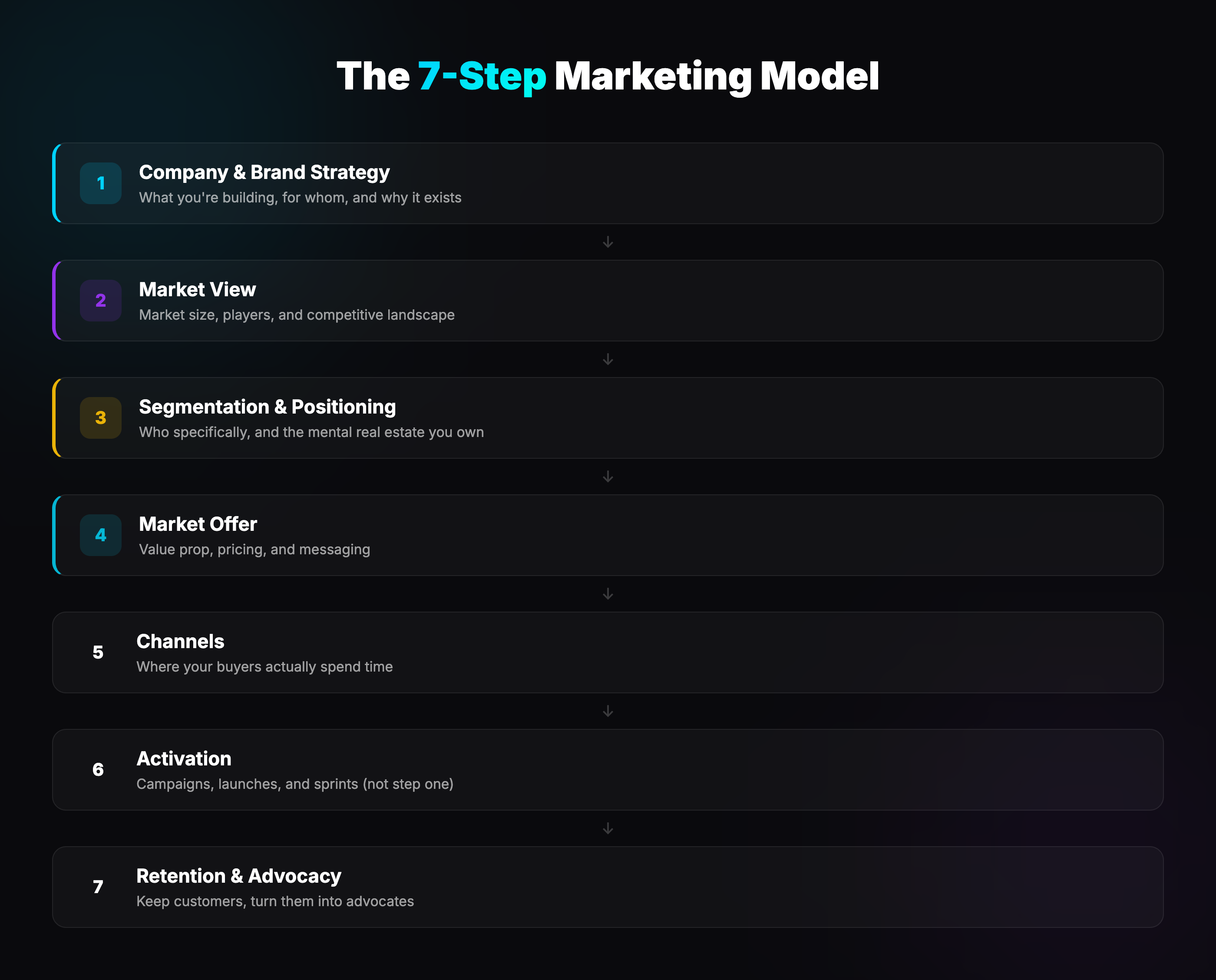
1. Company & Brand Strategy
This is where everything starts. Not with tactics. Not with "let's run some ads."
Your company strategy sets the constraints. What are you building? For whom? Why does it exist?
Brand strategy flows from that. Your positioning, your personality, how you want to be perceived.
Most companies get this backwards. They start fiddling with LinkedIn ads before they've figured out what they actually stand for.
2. Market View
Here's where you actually look at the market. Novel concept.
You need to understand:
- How big is the market?
- Who are the players?
- What's the competitive landscape?
But here's the bit folk miss: market testing beats academic research every time.
You can spend six months on a market analysis. Or you can test some messaging in three weeks and learn more.
The market view isn't about perfection. It's about having enough context to make smart decisions.
3. Segmentation & Positioning
This is where most companies fall apart.
Everyone's got an ICP (Ideal Customer Profile). Usually something like "B2B SaaS companies with 50-500 employees."
Brilliant. That's only about 50,000 companies.
Real segmentation means getting specific. Which of those companies actually have the problem you solve? Which ones have budget? Which ones can make decisions quickly?
And positioning? That's not a tagline. It's the mental real estate you own in your buyer's head.
If you can't describe your positioning in one sentence without using buzzwords, you don't have positioning. You have a word salad.
4. Market Offer
Now we get to the actual thing you're selling.
Three components:
- Value Proposition - What you deliver and why it matters
- Pricing - What you charge (and the confusion between PLG and enterprise is wild)
- Messaging - How you communicate all of this
Most companies spend 90% of their time on messaging and 10% on the value prop.
Should be the opposite.
If your value prop is weak, no amount of clever copywriting will save you. You're just polishing something that nobody wants.
5. Channels
Right. Where do you reach these people?
Content, events, paid, organic, partnerships, email, carrier pigeon (probably not that last one).
The mistake here is channel obsession. Folk pick a channel because it's trendy, not because their buyers are there.
Your channel strategy should flow from everything above. Where do your specific segments actually spend time? What format of content do they consume?
If your buyers are C-suite executives, TikTok probably isn't the play.
6. Activation
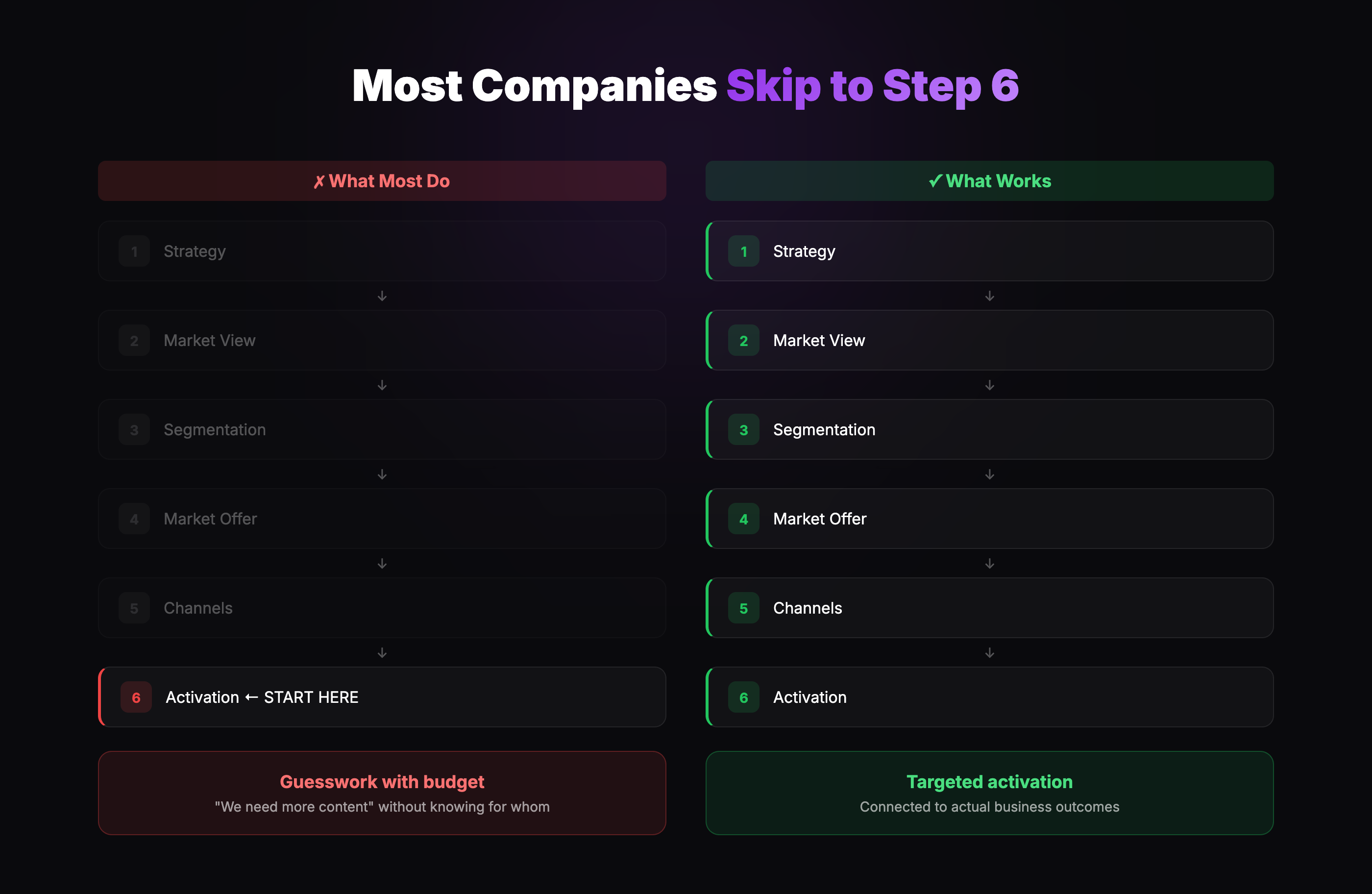
This is where most "marketing" happens. The actual campaigns, the launches, the sprints.
But notice it's step six. Not step one.
Activation without strategy is just noise. You're making content for the sake of content. Running ads for the sake of running ads.
The companies that win here have done the work in steps one through five. Their activation is targeted, specific, and connected to actual business outcomes.
Everyone else is just vibes.
7. Retention & Advocacy
Marketing doesn't stop at the sale. (Revolutionary, I know.)
Retention is cheaper than acquisition. Always has been. Yet most marketing teams hand customers off to "success" and never think about them again.
Advocacy is even better. Happy customers who bring you more customers.
But you can't manufacture this. If your product's rubbish, no amount of "referral programmes" will help.
The Uncomfortable Truth
This model isn't complicated. It's sequential.
The reason most marketing fails is that folk start at step five or six. They want to skip straight to the channels and activation.
"We need more content."
"We should be on LinkedIn."
"Let's try some Google Ads."
Sure. But for whom? Saying what? Based on what positioning?
If you can't answer those questions, you're not doing marketing. You're doing guesswork with budget attached.
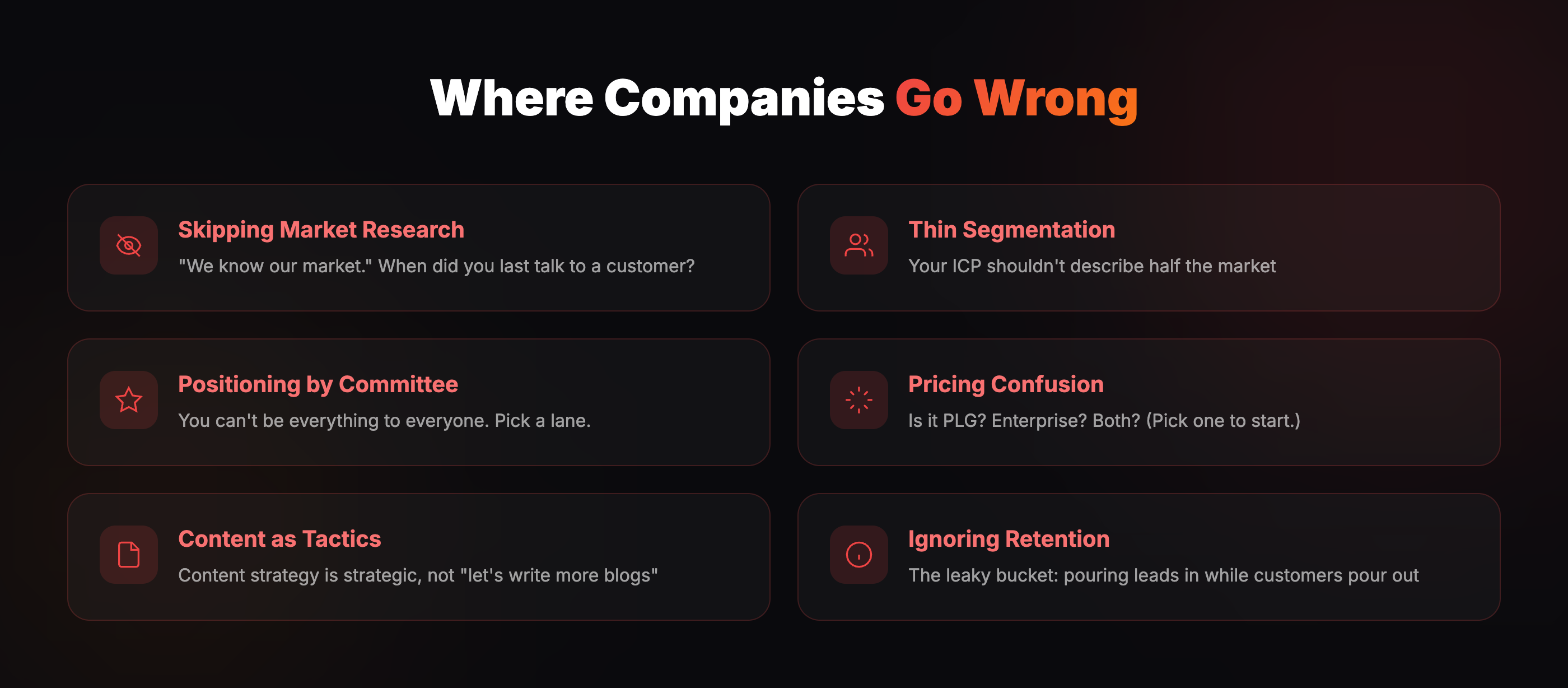
Where Most Companies Go Wrong
Skipping market research: "We know our market." Do you? When did you last actually talk to a customer?
Thin segmentation: Your ICP shouldn't describe half the market.
Positioning by committee: You can't be everything to everyone. Pick a lane.
Pricing confusion: Especially in SaaS. Is it PLG? Enterprise? Both? (Pick one to start.)
Content as tactics: Content strategy is strategic, not tactical. It's not "let's write more blogs."
Ignoring retention: The leaky bucket problem. You're pouring in leads while customers pour out the bottom.
The full model works when you work it. All seven steps. In order.
Skip steps, and you're just hoping for the best.
Hope isn't a strategy.


